
Castronovo di Sicilia is an inland hill village in the Province of Palermo, set in the Sicani Mountains on a slope near the Platani River, around 680 metres above sea level. Its setting in the upper Platani valley gives it a distinctly rural mountain character, with a compact old centre of narrow lanes, arches and courtyards that still reflects Arab-Norman patterns of settlement.
The village has roots far older than its medieval appearance suggests. The surrounding territory was inhabited from protohistoric times and is linked to early Sicani settlement along the Platani, before later Hellenized, Roman, Byzantine, Arab and Norman phases. Its earlier names, Kars-nubu and then Castrum Novum, preserve that layered identity: the first connected with the Arab period, the second with the Norman age.
Castronovo is also strongly marked by the memory of San Vitale, born in ancient Kars-nubu in the early 10th century to a noble family of Byzantine origin. This blend of mountain landscape, long settlement continuity and Byzantine-Arab-Norman heritage gives the village a more distinctive profile than a simple rural borgo.
Patron Saint:
Saint Vitale (San Vitale) – 1st Sunday in August
Nearest Airport:
Palermo (Falcone-Borsellino) – (108 km, 01:44)
Neighboring Cities:
Alia, Bivona, Cammarata, Lercara Friddi, Palazzo Adriano, Prizzi, Roccapalumba, Santo Stefano Quisquina, Sclafani Bagni, Vallelunga Pratameno
Attractions in Castronovo di Sicilia
Archaeological Sites
Colle di San Vitale: This hill preserves the remains of an earlier settlement, including a castle, a mill and several churches. Among them is the Chiesa della Madonna dell’Udienza, of Greek-Byzantine origin.
Monte Kassar: A surviving stretch of Byzantine defensive wall, reinforced by eleven towers, follows the northern slope of this limestone massif above the upper Platani valley. The fortifications are thought to date from the late seventh or eighth century.
Art and Architecture
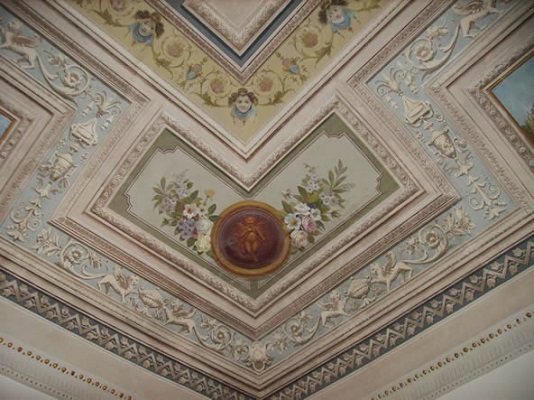
Chiesa Madre della SS. Trinità: Castronovo’s mother church has a Latin-cross plan and an interior decorated with stuccowork and frescoes by Antonio Messina. Its furnishings include an organ by Raffaele Della Valle.
Chiesa di San Francesco d’Assisi: Known locally as the “church of statues”, this church is distinguished by the numerous sculptures decorating its interior.
Chiesa di Santa Caterina d’Alessandria: The church houses a nineteenth-century wooden statue of Santa Caterina, its titular saint.
Chiesa di Maria SS. del Rosario: A painting of the Madonna del Rosario by Vito D’Anna is among the church’s notable artworks. The interior also contains stuccowork by Antonio Messina.
Fonte Regio: Built in 1567, this historic fountain stands near the old quarter that developed around the settlement of Rakal-biat.
Fonte Rabato: One of Castronovo’s historic fountains, Fonte Rabato is supplied by the Rabat spring.
Things to Do in Castronovo di Sicilia
Traditional Events
Festa di San Vitale: Traditionally celebrated on 9 March and again in the first week of August, the feast includes a procession carrying the saint’s statue through the town, accompanied by a band.
Festa di San Giuseppe: The March celebration includes the corteo dei santuzzi and a traditional tavolata di San Giuseppe, a ceremonial table laid with food. A procession carrying the saint’s statue follows Mass.
Settimana Santa: Good Friday observances centre on the Crucifixion at the Calvario, followed in the evening by the Deposition and a procession to the Chiesa Madre. On Easter Sunday, the ritual meeting between the Madonna Addolorata and the risen Christ includes the removal of the Virgin’s black mantle.
Festa del SS. Crocifisso: Held traditionally in May, this feast features a procession of statues of saints venerated in Castronovo. Devotees wearing traditional votive dress carry the heavy processional platform bearing the Crucifix on their shoulders.
Sagra della Truscitedda: This May food festival takes its name from the truscitedde, small cloth bundles used to collect and distribute local products. The custom reflects the area’s rural traditions.
Castrum Food Fest: Associated with October, this festival focuses on local food, regional products and the culinary traditions of the territory.
Christmas Traditions: Seasonal traditions include a living nativity scene in the Batia quarter, an itinerant Christmas novena and music by zampognari, traditional bagpipers.
Museums
Museo Civico d’Arte Contemporanea: Housed in Palazzo Giandalia, the civic museum focuses on contemporary art. The palace also houses a permanent exhibition devoted to the tenor Mario Del Monaco.
Traditional Food
Tuma Persa and Local Cheeses: Tuma persa is a speciality associated with Castronovo. The local cheesemaking tradition also includes pecorino, canestrato and caciotte sicane.
Cudduredda: This local speciality is a soft, small focaccia made with elderflowers incorporated into the dough.
Pitirri: A traditional local preparation resembling polenta, pitirri is made with wheat semolina and wild fennel.
Pera Coscia: This locally grown pear has De.Co. recognition, a municipal designation of origin linking it to Castronovo.
Practical Travel Information for Castronovo di Sicilia
Getting There by Car: The SS189 provides the road approach from both Palermo and Agrigento; take the exit for Castronovo di Sicilia.