
Caltagirone is a historic hill town in the heart of Sicily’s Calatino area, set across three hills where the Erei and Iblei mountain systems meet. Its amphitheatrical position looks towards the plains of Catania and Gela, with areas of grey clay badlands around it, a landscape closely tied to the material that has long defined the city.
Its identity is inseparable from ceramics. The name is said to derive from the Arabic *qual’at al giarun*, interpreted as “hill of vases”, and Arab influence in the 9th century is linked to glazing techniques and decorative motifs that became part of its craft tradition. Earlier and later cultures also left their mark, from Sicels, Greeks and Romans to Byzantines, Normans and Angevins.
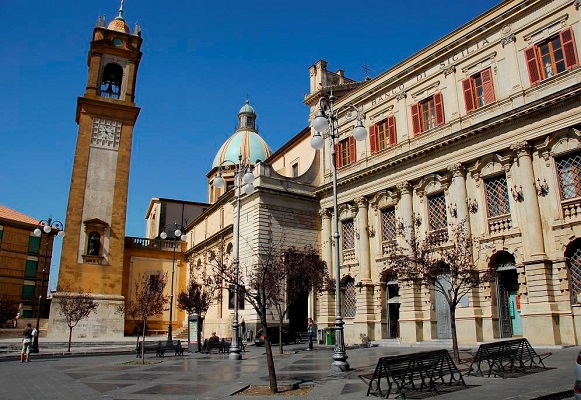
After the 1693 earthquake, Caltagirone was rebuilt with a strong late Baroque character and is now part of the UNESCO-recognised late Baroque towns of the Val di Noto. What makes it distinctive is the way clay and colour are woven into the city’s public image, turning Caltagirone into Sicily’s enduring city of ceramics.
Patron Saint:
Saint James (San Giacomo) – 25 July
Nearest Airport:
Comiso (Pio La Torre) – (51 km, 00:52)
Neighboring Cities:
Acate, Gela, Grammichele, Licodia Eubea, Mazzarino, Mazzarrone, Mineo, Mirabella Imbaccari, Niscemi, Piazza Armerina, San Michele di Ganzaria

Attractions in Caltagirone
UNESCO Sites
Historic Centre: Caltagirone forms part of the UNESCO-listed late Baroque towns of the Val di Noto. Beside the monumental staircase, the old quarters of San Giorgio and San Giacomo contain a network of narrow lanes and steps, known locally as carruggi, lined with churches and historic residences.
Archaeological Sites
Monte San Mauro: This archaeological area contains remains of a prehistoric settlement subsequently occupied by Greeks. Surviving structures include ancient houses and the remains of a small building compared in form to the anactoron at Pantalica.
Art and Architecture
Scalinata di Santa Maria del Monte: Built in 1606 to connect the lower and upper parts of the historic centre, the staircase has 142 lava-stone steps with colourful maiolica risers. Their varied designs reflect ceramic styles and motifs from different periods. The Church of Santa Maria del Monte stands at the top, overlooking the town’s rooftops, bell towers and domes.
Cattedrale di San Giuliano: Standing in Piazza Umberto, the cathedral has Norman origins and a three-aisled interior. Its nineteenth-century frescoes are by the Sicilian painter Giuseppe Vaccaro.
Basilica di San Giacomo: Rebuilt several times following earthquakes and wartime damage, the basilica has a Baroque façade and a contemporary bronze door. Its interior contains works of art and religious relics.
Chiesa di San Francesco d’Assisi: This church belongs to the convent complex of the Franciscan Friars Minor. Its eighteenth-century Baroque façade is a distinctive feature of the building.
Tondo Vecchio: This semicircular monument recalls the form of a theatre. It faces the Valle di Ponente, with an outlook towards the coast.
Giardino Pubblico: At the beginning of Via Roma, the public garden was designed by Filippo Basile. Its balustrade incorporates ceramic vases and grotesque faces, extending the town’s ceramic decoration into its garden architecture.
Nature Sites
Riserva Naturale Orientata Bosco di San Pietro: This woodland nature reserve lies in Caltagirone’s surrounding countryside and forms an extensive green area within the Calatino.
Things to Do in Caltagirone
Traditional Events
Settimana Santa: Holy Week traditions include a living Via Crucis and the Good Friday procession with the wooden figure of the dead Christ and the Addolorata. On Easter Sunday, a giant statue of Saint Peter takes part in a Giunta, the ceremonial meeting of the risen Christ and the Madonna.
Scala Infiorata: In May, pots of plants and flowers are arranged across the steps of Santa Maria del Monte to create a single large design. The display is associated with celebrations for the Madonna di Conadomini.
Festa della Madonna di Conadomini: Celebrated on 31 May, this feast includes a procession and a parade of carts and tractors decorated with rusedda, or rockrose. A historical procession representing the Senato Civico also forms part of the tradition.
Festa di San Giacomo and Scala Illuminata: Celebrations for San Giacomo include a procession of the saint’s relics and the historical procession of the Senato Civico. For the Scala Illuminata, thousands of coloured paper cylinders containing oil-filled terracotta lamps are arranged on the staircase to form illuminated patterns. The staircase illumination also accompanies celebrations for Maria Santissima del Ponte on 14 and 15 August.
Christmas Nativity Traditions: Caltagirone’s ceramic artists create artistic presepi, or nativity scenes, for Christmas displays. The town’s carruggi also provide the setting for a living nativity.
Festa dell’Immacolata Concezione e Sagra della Muffuletta: This celebration on 8 December combines the religious feast of the Immaculate Conception with a food festival dedicated to muffuletta.
Museums
Museo Regionale della Ceramica: The museum traces the technical and artistic history of ceramic production through material ranging from prehistoric finds to contemporary creations.
Museo Internazionale del Presepe: This museum is dedicated to the nativity scene, an art form closely associated with Caltagirone’s ceramic tradition.
Teatro-Museo dei Pupi Siciliani: This theatre-museum focuses on Sicilian pupi, the traditional puppets associated with the island’s puppet theatre.
Traditional Food
Maccu Verde: A traditional local preparation, maccu verde combines fresh broad beans with wild fennel and onion.
Cubaita and Giuggiulena: Caltagirone’s sweet specialities include cubaita, described locally as a soft nougat made with honey, cooked grape must and candied orange. Giuggiulena combines honey and sesame seeds.
Ricotta Pastries: Local ricotta features in the town’s pastry-making tradition, including cannoli and cassatedde.
Practical Travel Information for Caltagirone
Arriving by Car: From Palermo, take the A19 Palermo–Catania motorway to the Enna exit, then continue on the SS117 bis. From Catania, follow the SS417 Catania–Gela road and take the Caltagirone Nord exit.