
Grammichele is a town in the Province of Catania, set in the sunny Catania plain and linked to the slopes of the Iblei Mountains. Its identity is immediately unusual: this is not a town that grew by chance, but a planned settlement with a precise hexagonal design, centred on a large geometric space from which six streets radiate outward.
The town was founded after the 1693 Val di Noto earthquake destroyed the medieval settlement of Occhiolà. Prince Carlo Maria Carafa Branciforte established the new community on the nearby fief of Grammicieli, giving Grammichele both its name and its defining role as a post-earthquake “ideal city”. Its layout reflects the late 17th-century effort to rebuild with order, proportion and greater safety.
Today, Grammichele’s character lies in this meeting of rational urban planning and deep local memory. Its geometric centre, ties to sacred art and religious tradition, and connection with the lost town of Occhiolà make it one of Sicily’s most distinctive examples of reconstruction after the great earthquake.
Patron Saint:
Saint Michael (San Michele Arcangelo) – 8 May
Nearest Airport:
Comiso (Pio La Torre) – (38 km, 00:40)
Neighboring Cities:

Attractions in Grammichele
Archaeological Sites
Parco Archeologico di Occhiolà: On the hill of Terravecchia, the archaeological area preserves the ruins of the medieval settlement destroyed by the earthquake of 1693. The remains include those of the Castello di Terravecchia.
Art and Architecture
Piazza Carlo Maria Carafa: This hexagonal square anchors Grammichele’s geometric street plan, with six roads radiating towards smaller open spaces. Its monuments include a large sundial featuring a kneeling bronze figure surrounded by rings, and a statue of the town’s founder above the Scala dei saperi.
Chiesa Madre: Dedicated to San Michele Arcangelo and Santa Caterina d’Alessandria, the Baroque mother church overlooks the central square. Its interior contains decorated marble altars, nineteenth-century stuccowork and paintings from the seventeenth and eighteenth centuries.
Chiesa di San Leonardo: This church houses a crucifix singled out among Grammichele’s works of sacred art.
Santuario della Madonna del Piano: Near the ruins of Occhiolà, this seventeenth-century sanctuary survived the earthquake of 1693. Its single-nave interior contains frescoes by Vaccaro.
Things to Do in Grammichele
Traditional Events
Festa di San Giuseppe: The March celebration traditionally includes a meal in the square with participants representing the Holy Family. Gifts donated by local residents are auctioned to raise funds for the town’s orphans.
Settimana Santa: Holy Week traditions include the procession of Cristo alla Colonna on Wednesday evening. On Good Friday, statues of the dead Christ and Maria Addolorata are carried through the town.
Festa di San Michele Arcangelo e Santa Caterina d’Alessandria: Held in May, this celebration includes the ceremonial departure of the saints’ statues from the church and a procession. Entertainment and fireworks also form part of the festivities.
Festa della Madonna del Piano: September celebrations feature night-time religious processions, traditional songs, prayers and torchlight. A distinctive custom is the pellegrinaggio de’ virgineddi, in which girls take part in thanksgiving to the Virgin, followed by a ceremonial meal at which they wear traditional jewellery.
Presepe vivente di Occhiolà: A traditional living Nativity is staged at the archaeological park of Occhiolà during the Christmas period.
Museums
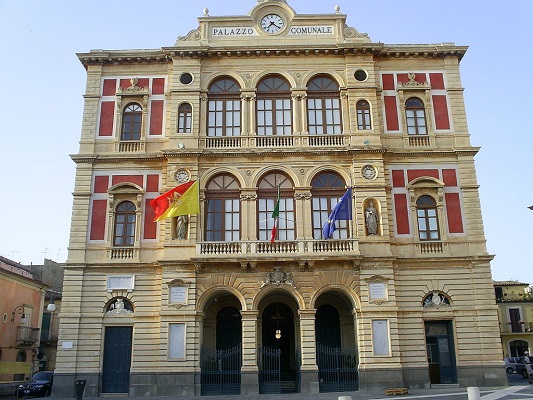
Museo Civico: Housed in the Renaissance-style Palazzo Comunale, the civic museum holds archaeological finds from Occhiolà. Its collection also includes the original slate tablet engraved with Grammichele’s hexagonal town plan.
Traditional Food
Salsiccia: Sausage is a characteristic product of Grammichele’s local culinary tradition.