
Licata is a coastal town on the southern shore of Sicily, set on the western side of the Gulf of Gela where the Salso River meets a mostly low landscape of modest hills and a rugged shoreline. Its character is strongly maritime, with the port, fishing traditions and coastal scenery forming part of daily identity alongside an urban fabric marked by Baroque, 18th-century and Liberty influences.
The town’s background reaches far into antiquity. The area was frequented by Phoenicians and Greeks, became an important commercial centre in Roman times, and appears in Norman-period sources under names such as Leocata and Licata, sometimes alongside Olimpiada. Some accounts also connect its origins with Phintias of Agrigento in 282 BC, after the destruction of Gela, though the early chronology is not entirely straightforward.
Licata’s later history is closely tied to its role as a Mediterranean grain port, a function that helped shape its growth in the 17th and 18th centuries. Today its distinctiveness lies in that combination of sea-facing identity, layered historical memory and architecture, set between river, hills and a varied Sicilian coastline.
Patron Saint:
Saint Angelus (Sant’Angelo) – 5 May
Nearest Airport:
Comiso (Pio La Torre) – (73 km, 01:09)
Neighboring Cities:
Butera, Camastra, Campobello di Licata, Naro, Palma di Montechiaro, Ravanusa
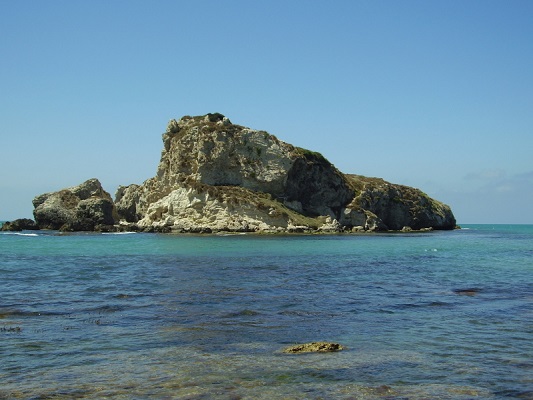

Attractions in Licata
Archaeological Sites
Finziade: Excavations around Castel Sant’Angelo have revealed remains of the Hellenistic town of Finziade. Houses, places of worship, public spaces and craft workshops provide evidence of its urban layout.
Pozzo della Grangela: At the foot of the hill known as La Montagna, this rock-cut structure was used to collect water.
Art and Architecture
Santuario di Sant’Angelo: This church has a three-nave interior in Baroque style. It also contains a well associated with the discovery of Sant’Angelo’s relics and traditionally regarded as miraculous.
Chiesa Madre di Santa Maria la Nuova: Licata’s mother church contains the Cappella del Cristo Nero, with its large crucifix.
Chiesa e Convento di San Francesco: The church and convent form part of Licata’s Baroque architectural heritage. The church façade was designed by Giovanni Biagio Amico.
Chiesa di San Domenico: This church contains paintings by the Florentine artist Filippo Paladini.
Chiesa di Sant’Agostino: An example of Rococo architecture, the church is also known as the Santuario di Maria Santissima Addolorata.
Palazzo di Città: Designed by Ernesto Basile, Licata’s town hall stands in Piazza Progresso. It is one of the city’s principal examples of Liberty, the Italian expression of Art Nouveau.
Palazzo Verderame Navarra: This urban palace is another example of Licata’s Liberty architecture, distinct from the villas on the surrounding hills.
Faro di Licata: The lighthouse takes its name from the former Castello di San Giacomo, which no longer survives. It is a prominent feature of Licata’s waterfront.
Castles
Castel Sant’Angelo: This Spanish fortress occupies a hill above Licata, overlooking the coastline and the Piana di Licata.
Beaches
Marianello: This beach is distinguished by the clay gullies, or calanchi, that form the backdrop to the shore.
Things to Do in Licata
Traditional Events
Carnevale Licatese: Licata’s carnival tradition features allegorical floats and costumed groups parading through the streets, accompanied by music and dancing.
Festa di San Giuseppe: Held in March, this celebration includes a procession carrying a sculptural group of Saint Joseph and the infant Jesus, accompanied by a band. The food tradition centres on minestra di San Giuseppe, served in Piazza Duomo.
Settimana Santa: Holy Week observances begin on the Friday before Palm Sunday with the procession of the Madonna Addolorata. Further rites include the Cristo alla Colonna procession on Holy Tuesday, the Via Crucis and procession of the dead Christ on Good Friday, and the procession of the risen Christ on Easter Sunday.
Festa di Sant’Angelo: The traditional celebrations take place on 5 May and on the Sunday after Ferragosto, 15 August. A central feature is the procession of the saint’s silver urn, carried through the streets on a ceremonial platform.
Grande Fiera di Maggio: This May fair is associated with art and handmade crafts.
Museums
Museo Archeologico della Badia: Housed in the former Benedictine monastery known as the Badia, the archaeological museum contains finds ranging from the Neolithic to the Archaic Greek period. Its collections also include medieval art; the monastery itself has a cloister added during its seventeenth-century enlargement.
Museo del Mare e dello Sbarco: Located in the cloister of Sant’Angelo, this museum holds a collection of ancient anchors and amphorae.
Traditional Food
Fauzza: Licata’s traditional pizza is topped with salted sardines, tomato, olives and pecorino.
Local Produce: Products associated with Licata include the buttiglieddru tomato, kohlrabi and the long cucummuru da insalata, used in salads.
Traditional Sweets: Licata’s sweet-making traditions include minnilati at Christmas, alongside mastazzola and muffuletti licatesi.
Practical Travel Information for Licata
Getting There by Car: From Palermo, follow the SS121 and SS189 towards Agrigento, then join the SS115 and follow signs for Licata.