
Cianciana is a small borgo in the Agrigento area, set in the valley of the Platani River and enclosed by the Sicani Mountains. At the foot of Monte Calvario, its landscape shifts between wooded slopes, wheat fields, olive groves, vineyards and orchards, giving the village a distinctly inland Sicilian character.
The area has Roman-era roots, and the name Cianciana is linked to the imperial-age villa known as Massa Cinciana. The present settlement dates to 1646 and was once known as Sant’Antonino di Cianciana, before its identity changed profoundly in the 19th century with the development of sulphur mining.
That mining past still defines the village as much as its agricultural surroundings. Cianciana is remembered as the “village of the sulphur mines”, a place where rural traditions and industrial memory meet in a compact mountain-valley setting.
Patron Saint:
Saint Anthony of Padua (Sant’Antonio Di Padova) – 13 June
Nearest Airport:
Palermo (Falcone-Borsellino) – (131 km, 02:19)
Neighboring Cities:
Alessandria della Rocca, Bivona, Cattolica Eraclea, Ribera, Sant’Angelo Muxaro

Attractions in Cianciana
Archaeological Sites
Necropoli di Millaga: This archaeological site contains the remains of a Roman necropolis.
Art and Architecture
Chiesa Madre della Santissima Trinità: Standing in Piazza Aldo Moro, the seventeenth-century mother church houses a statue of Sant’Antonio di Padova by Girolamo Bagnasco.
Palazzo Joppolo: This palace in Piazza Aldo Moro originated as a watchtower. Ludovico Joppolo converted it into a private residence in the seventeenth century.
Torre dell’Orologio: The clock tower stands at the junction of Corso Vittorio Emanuele and Salita Regina Elena, beside the Chiesa del Purgatorio.
Chiesa del Purgatorio: A monumental staircase leads to the terrace providing access to this small church beside the clock tower.
Chiesa di Sant’Antonio: This seventeenth-century church is an example of Sicilian Baroque architecture in Cianciana.
Palazzo del Barone Micheli: Dating from 1860, this palace is distinguished by its Neoclassical architecture.
Nature Sites
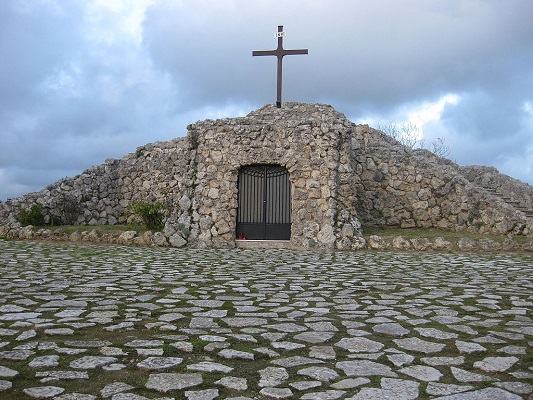
Monte Calvario: Rising above Cianciana, Monte Calvario has a small church and a wooden cross on its heights.
Maccalube di Bissana: These mud-volcano features in Contrada Bissana emit methane and carbon dioxide.
Monte Cavallo: The mountain contains caves of natural and archaeological interest. Grotta del Cavallo has a small lake at its bottom, and pottery dating to the Copper Age and early Bronze Age has been found in the cave.
Things to Do in Cianciana
Traditional Events
Festa di San Giuseppe: Traditionally celebrated on 19 March, the feast includes tables laid with food, a re-enactment of the Flight into Egypt and a procession with the saint’s statue.
Settimana Santa: Cianciana’s Holy Week traditions include a live religious re-enactment of significant episodes from the Passion and death of Jesus.
Festa di Sant’Antonio di Padova: The traditional celebration on 13 June includes a procession through the streets of the town.
Sagra del Raccolto: Held traditionally on the night of 31 July, this harvest celebration brings together music, dancing and a shared meal of chickpeas and broad beans, known locally as ciciri e favi.
Museums
Museo Civico: Housed in a former watermill, the civic museum presents material relating to traditional rural life and sulphur mining, two important strands of Cianciana’s past.
Practical Travel Information for Cianciana
Getting There by Car: From Agrigento, follow the SS118 towards Raffadali and Cianciana. From Palermo, take the SS121 and SS189 towards Agrigento, leave at Lercara Friddi and continue along the SS188 to the junction with the SS118, following signs for Cianciana.