
Geraci Siculo is a small medieval hill village in Sicily’s Madonie area, set on the slopes of the mountains with wide views over valleys, inland countryside and rugged highland landscapes. Its compact old centre, built of stone houses and narrow winding lanes, gives the village a strongly historic character rooted in its hilltop position and rural surroundings.
The name is linked to the Greek *ierax* or *jerax*, meaning “vulture”, a detail that points to the area’s early Mediterranean layers. Geraci’s past includes Greek, Byzantine, Muslim and Norman phases, while the present settlement took shape in the medieval period. From 1252 it became closely associated with the Ventimiglia family, whose feudal presence left a lasting mark on the village’s identity.
Today Geraci Siculo is defined by this combination of mountain setting, medieval urban fabric and layered cultural memory. Traces attributed to the Muslim period in the upper streets, together with the long Ventimiglia connection, make it one of the Madonie’s most distinctive historic borghi.
Patron Saint:
Saint Bartholomew (San Bartolomeo) – 24 August
Nearest Airport:
Catania (Fontanarossa) – (122 km, 01:41)
Neighboring Cities:
Castel di Lucio, Castelbuono, Gangi, Nicosia, Petralia Soprana, Petralia Sottana, San Mauro Castelverde
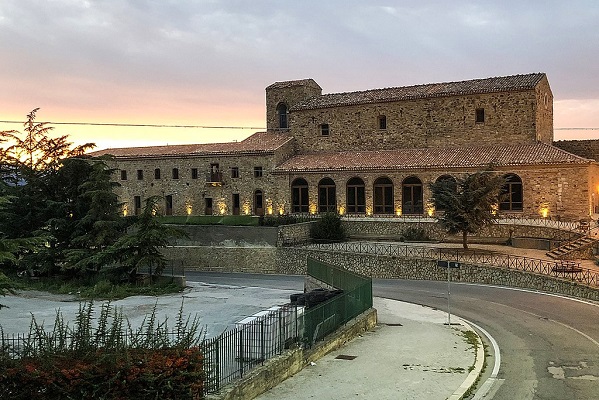

Attractions in Geraci Siculo
Art and Architecture
Chiesa Madre di Santa Maria Maggiore: Standing in Piazza del Popolo, the mother church has a Gothic pointed-arch portal. Its artworks include a baptismal font and statues of the Madonna della Neve and Madonna della Mercede from the Gagini workshop.
Chiesa del Collegio di Maria: Also overlooking Piazza del Popolo, this church was founded in 1738. Its single-nave Baroque interior contains several paintings.
Chiesa di Santo Stefano: This seventeenth-century church has a central-plan layout and a bell tower topped by a spire covered in multicoloured majolica tiles.
Chiesa di San Giacomo: Near the castle ruins, this church contains a fourteenth-century fresco of San Filippo di Agira and a poplar-wood crucifix from the same period. A wooden statue of San Giacomo is another of its principal works.
Chiesa di San Bartolomeo: Forming part of the former Augustinian convent, this church houses a white-marble polyptych attributed to Antonello Gagini.
Chiesa di Santa Maria La Porta: The church takes its name from its former position near one of the town gates. Its high altar features a triptych from the Gagini workshop.
Chiesa dei Santi Cosma e Damiano: In contrada San Cosimano, this small church is distinguished by its early Gothic portal.
Via della Saggezza: Linking Piazza del Popolo with the castle ruins, this street is decorated with tiles bearing traditional proverbs and sayings passed down through generations.
Bevaio della SS. Trinità: This historic watering trough was commissioned by Marquis Simone Ventimiglia.
Salto del Ventimiglia: This glass-and-steel viewing structure projects out over the landscape. Its panorama extends across the valley of the torrente Grosso towards the western Nebrodi and Mount Etna.
Priorato della Cava: Set in the Bosco della Cava, this former Basilian monastery is a Norman foundation.
Castles
Castello dei Ventimiglia: Parts of the castle walls survive above the town. The associated Chiesa di Sant’Anna was commissioned by Francesco I Ventimiglia as a family chapel.
Things to Do in Geraci Siculo
Traditional Events
Carnevale di Geraci Siculo: The town’s Carnival traditions include a parade of allegorical floats through the streets and evenings of dancing.
Settimana Santa: Holy Week observances begin on Palm Sunday. On Good Friday, the procession of the Cristo Morto and the Addolorata leaves the Chiesa di Santa Maria La Porta, accompanied by the traditional Passion chants known as “I Parti a Simana”.
Festa di San Giuseppe Lavoratore: Celebrated on 1 May at the small Cappella di San Giuseppe, this feast includes the distribution of blessed Pane di San Giuseppe.
Festa del SS. Crocifisso: The celebration on 3 May includes a procession carrying an image of the suffering Christ. Devotees traditionally follow barefoot, holding votive candles in thanksgiving for favours received.
Festa della Transumanza: Held in May, this celebration centres on the seasonal movement of livestock from lower pastures to the high Madonie. Its traditions include a fair with local produce, folk music and dancing, horse excursions and falconry demonstrations.
Festa di Maria SS. Annunziata: On the second Sunday in July, a procession carries the painting of the “Gran Madre Annunziata”, normally kept in the Chiesa Madre.
Cavalcata dei Pastori: Also called “A Carvaccata di Vistiamara”, this celebration in honour of the Blessed Sacrament traditionally takes place every seven years, on the third Sunday in July. Shepherds in period costume ride through the town carrying wooden hoops decorated with white ribbons and caciocavallo cheese shaped into horses and doves.
Giostra dei Ventimiglia: This historical re-enactment in August features period-costume parades, falconry demonstrations, mounted games and medieval scenes.
Festa di San Giacomo: Held on the second Sunday in August, the feast includes a solemn Mass in the Chiesa Madre and an afternoon procession carrying the saint’s statue through the centre.
Festa di San Bartolomeo: On 24 August, the statues of San Bartolomeo and San Giacomo are carried through the town to the Chiesa Madre. They traditionally remain there until the Festa del Ringraziamento on 24 September.
Museums
MUSeBArch: Housed in the former Convento dei Cappuccini just outside the built-up centre, this municipal cultural complex brings together the historic Capuchin library, the town’s historical archive and the Museo Etnoantropologico delle Madonie, devoted to local traditions.
Traditional Food
Cassate di Natale: Geraci Siculo’s Christmas pastry tradition includes cassate filled with dried figs, raisins, almonds, hazelnuts and chocolate.
Frusciuletti: These fried pastries are filled with ricotta and dusted with icing sugar.
Agneddri pasquali: These local Easter biscuits are finished with white icing and decorations.
Serafineddi: Honey and almonds are the defining ingredients of these traditional local sweets.
Practical Travel Information for Geraci Siculo
Driving from Catania: Take the A19 towards Palermo and leave at Tremonzelli. Continue along the SS120 via Castellana Sicula and Petralia Sottana, then take the SS286 towards Geraci Siculo.