
Castel di Lucio is a small medieval village in the western Nebrodi, set among hills and valley landscapes near the Tusa river. Its position gives it a strong mountain character, with the surrounding countryside opening towards views of both sea and peaks, while the village itself keeps the compact feel of an old rural settlement.
Its history begins in the Norman period, when the first settlement was known as Castelluzzo or Castellutium; the form Castelluccio is also linked to the origin of the present name. Later, Castel di Lucio belonged to the County of Geraci and was tied to the Ventimiglia family until 1480, reflecting its role as a feudal stronghold overlooking the Tusa valley.
Today its identity rests on that combination of strategic medieval origins, Nebrodi landscape and local tradition. Narrow streets, stone-built fabric and memories of stone and wood craftsmanship give the village a character that is modest but distinctive: Castel di Lucio is best understood as a hill community whose name, setting and history are all connected to its commanding place above the valley.
Patron Saint:
Saint Placidus (San Placido) – 5 October
Nearest Airport:
Catania (Fontanarossa) – (109 km, 02:02)
Neighboring Cities:
Geraci Siculo, Mistretta, Nicosia, Pettineo, San Mauro Castelverde
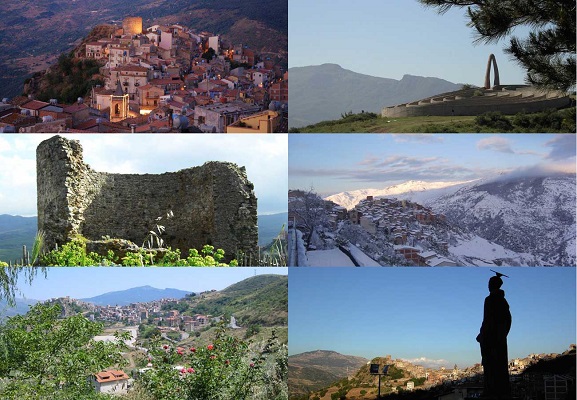
Attractions in Castel di Lucio
Art and Architecture
Chiesa Madre: Standing in the main square, the mother church took shape in the seventeenth century through the amalgamation of smaller churches. Its artworks include a stone ciborium with relief carving attributed to the Gagini school, Simeone Li Volsi’s Cristo alla colonna, and a wooden pulpit by local craftsman Nicolò Campo.
Chiesa di Santa Maria del Soccorso: This church on Via Convento adjoins the Franciscan convent. Its collection includes a sixteenth-century statue of the Madonna del Soccorso, an inlaid tabernacle bearing the face of Ecce Homo, and Michelangelo Salvo’s 1871 painting of the Ascension of St Francis. Frescoes in the presbytery vault also depict the saint.
Chiesa di San Carlo: The church houses paintings by Salvatore de Caro, whose work also appears in Santa Maria del Soccorso. It is the seat of the confraternity of the same name.
Chiesa di Santa Lucia: This church contains a wooden statue of St Lucy by Noè Marullo, the sculptor from Mistretta.
Oratorio del SS. Sacramento: The oratory is distinguished by the frescoes decorating the dome above its apse.
Chiesa di Sant’Antonio di Padova: Already in existence in the fourteenth century, this is the oldest church identified in the village. It was commissioned by a local noble family.
Chiesa del SS. Salvatore: This small rural church stands on a hill overlooking the Halaesa valley. Historically, a statue of the flagellated Christ was carried here in procession during periods of illness or calamity.
Arethusa: Coloured panels by Piero Dorazio and Graziano Marini decorate the Carabinieri barracks at the entrance to the village. The work belongs to Fiumara d’Arte, the outdoor contemporary sculpture project established by Antonio Presti.
Labirinto d’Arianna: Italo Lanfredini’s labyrinth occupies a hill facing Castel di Lucio. It is one of the village’s contributions to the Fiumara d’Arte collection.
Una curva gettata alle spalle del tempo: Created by Paolo Schiavocampo in 1990, this Fiumara d’Arte sculpture is a reinforced-concrete monolith clad in iron sheets. Its form evokes a sail caught by the wind.
Palmento di contrada Carcara: This seventeenth-century wine press in contrada Carcara was carved directly into the rock, preserving evidence of the area’s historic wine production.
Castles
Castello di Castel di Lucio: Associated with the Ventimiglia family, the castle occupies the rocky height above the village. The Church of San Nicola di Bari stands at its foot.
Nature Sites
Bosco Montagna: This woodland in the surrounding countryside provides a setting for nature walks and contains an equipped recreation area. It is also the setting for the village’s spring celebration.
Things to Do in Castel di Lucio
Sport
Sentiero del Calvario: This walking route leads from the Franciscan convent to a plateau with views extending towards the sea and surrounding mountains.
Traditional Events
Carnevale: The village’s Carnival traditions include a costume parade departing from Piazza San Carlo and a children’s celebration at the municipal theatre.
Festa di San Giuseppe: Celebrated in March, this feast includes the traditional pranzo dei Virgineddi. The ceremonial meal features dishes such as fried cardoons, salt cod and wild fennel.
Quarantore and Holy Week: The Quarantore devotion at the Church of San Carlo is marked by decorations of oranges, palms and laurel. On Good Friday, the procession brings a sixteenth-century Ecce Homo statue, the Cross, the Addolorata and a recumbent Christ in a glass urn through the village to the Chiesa Madre.
Festa della Primavera: Traditionally held in May or June in the San Giovanni–Montagna woodland, the spring celebration brings together excursions, horse rides, an outdoor Mass and tastings of local produce.
Sagra delle fave squadate: This June food festival is associated with the feast of Saints Peter and Paul. Broad beans are cooked in the square, with music accompanying the gathering.
Notte degli Antichi Sapori: This August celebration follows a food-tasting route through the village’s streets and squares, accompanied by music and dancing.
Sagra du Cascavaddu: Traditionally held on 17 August, this festival centres on Castel di Lucio’s matured caciocavallo cheese and other local dairy products. Folk music accompanies the celebration.
Festa della Madonna del Soccorso: The traditional celebration falls on 19 August, when an evening procession carries the statue of the Madonna through the village.
Festa di San Placido: Celebrations take place on 20 August and again on 4–5 October. Traditions include the calata a cira from Santa Lucia to the Chiesa Madre on the eve of the feast, followed by the procession and the ballatedda i San Pla on the feast day.
A notti Santa a Castidduzzu: The Christmas living nativity takes place among the old houses near the castle. Alongside the Nativity scenes, participants recreate traditional trades.
Traditional Food
Tabisca: This local bread focaccia is served with ricotta. Other documented toppings include olive oil and oregano, or tomato and salted ricotta.
Local cheeses: Castel di Lucio’s dairy specialities include provola dei Nebrodi, tuma and ricotta.
Practical Travel Information for Castel di Lucio
Getting There by Road: Road approaches include the SP176 from Mistretta and the SP50 from Gangi.