
Custonaci is a small town in western Sicily, in the province of Trapani, set on a rocky hill about 186 metres above sea level near the eastern end of the Gulf of Bonagia. Its landscape links the inland slopes of Monte Cofano with a low coastline close by, giving the town both a hilltop and maritime character.
Its identity is closely tied to Erice, of which it remained a part until the mid-20th century. The area was inhabited from prehistoric times, with caves preserving early human traces, while the first settled nucleus is associated with Norman initiatives in the Trapani hinterland. In 1241, Frederick II granted thirteen uninhabited casalia to the University of Monte San Giuliano, today’s Erice, as part of the repopulation of the inland territory.
Today, Custonaci is defined by a distinctive blend of Marian devotion, archaeological memory, rural traditions and stone-working culture. Known as the “Riviera dei marmi”, it has extracted marble since the 16th century and built a local identity around a material exported far beyond Sicily.
Patron Saint:
Maria SS. di Custonaci – last Wednesday in August
Nearest Airport:
Trapani (Birgi) – (32 km, 00:44)
Neighboring Cities:
Buseto Palizzolo, Castellammare del Golfo, San Vito Lo Capo, Valderice

Attractions in Custonaci
Archaeological Sites
Grotta Miceli: This cave in the Scurati area contains engravings dating from the Upper Palaeolithic, evidence of prehistoric activity in Custonaci’s caves.
Art and Architecture
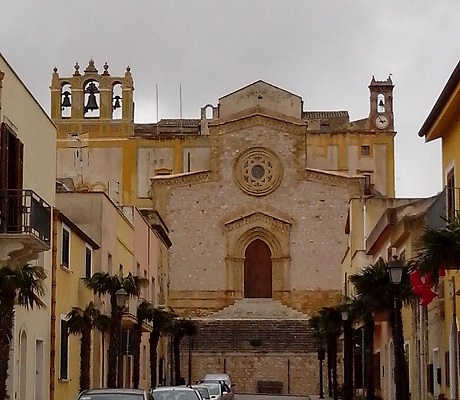
Santuario della Madonna di Custonaci: Standing on a rocky hill, the sanctuary is the religious focal point around which the town developed. It houses the painting of Maria SS. di Custonaci, an object of local devotion and pilgrimage.
Nature Sites
Riserva di Monte Cofano: The reserve protects a landscape that provides habitat for several bird species. Trails pass through the reserve, offering opportunities to explore its vegetation and natural surroundings.
Grotta Mangiapane: This cave in Scurati takes its name from the Mangiapane family, who lived here for many years. Its history as a dwelling gives it an interest beyond its natural setting.
Parco Suburbano Cerriolo: This green area is distinguished by its karst formations. Almond trees, ash trees and prickly pears form part of its vegetation.
Beaches
Baia di Cornino: Cornino is Custonaci’s seaside area, with a bay that forms the focus of the town’s coastal tourism.
Things to Do in Custonaci
Traditional Events
Festa di San Giuseppe Artigiano: Traditionally held in the final days of April, this celebration includes a votive altar laden with pane di San Giuseppe. Three people representing the Holy Family take part in a ceremonial meal, accompanied by the town band.
Sagra della Spincia: Also called Sfincia Fest, this July food festival celebrates the local sweet speciality with tastings and folklore.
Festa di Maria SS. di Custonaci: The four-day August celebration re-enacts the arrival by sea of the Madonna’s image, which is carried in procession to the sanctuary. Traditional elements include solemn singing and fireworks.
Degustando la Busiata: Held in August at Baia di Cornino, this food festival centres on busiata, a handmade pasta. Local craft displays and entertainment accompany the food event.
Presepe Vivente di Custonaci: At Christmas, Grotta Mangiapane provides the setting for a living Nativity. Alongside the biblical scenes, participants recreate traditional crafts and aspects of the area’s farming and pastoral life.
Practical Travel Information for Custonaci
Arriving by Car: From Palermo, take the A29 to the Castellammare del Golfo exit, then follow the SS187 towards the turning for Custonaci.