
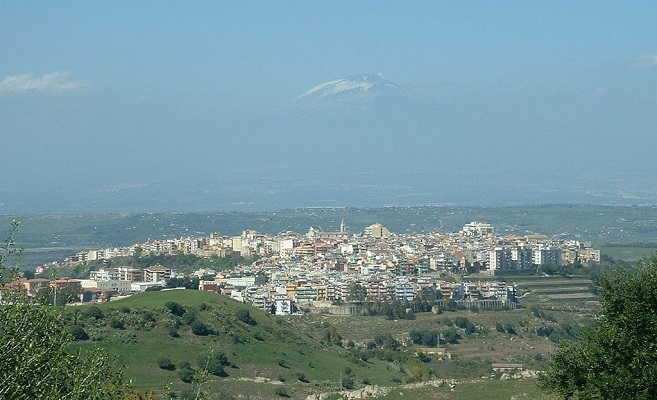
Carlentini is a hill town in the Syracuse area of eastern Sicily, set near Lentini on the edge of the Plain of Catania. Its position, between citrus groves and the nearby Pancali and Iblei mountains, gives it the character of both an agricultural centre and a place conceived for control of the surrounding landscape.
Unlike many Sicilian towns with ancient urban origins, Carlentini is defined above all by its 16th-century foundation. It was established in 1551 during the Spanish-Habsburg period as a fortified settlement intended to defend eastern Sicily, with its name recalling Charles V: from “Lentini di Carlo” and Carleontini to the modern Carlentini. Promoted by Viceroy Giovanni De Vega and designed with a planned grid layout, the town still carries the imprint of that strategic beginning.
Rebuilt after destructive events including a major fire and the 1693 earthquake, Carlentini combines a fortified past with a locally rooted rural identity. Its distinctive character lies in this unusual blend: a deliberately planned “fortress city” above the plain, now closely tied to the agricultural landscape around it.
Patron Saint:
Saint Lucy (Santa Lucia) – 13 December
Nearest Airport:
Catania (Fontanarossa) – (49 km, 00:44)
Neighboring Cities:
Augusta, Buccheri, Catania, Ferla, Francofonte, Lentini, Melilli, Sortino

Attractions in Carlentini
Archaeological Sites
Parco Archeologico di Leontinoi: The archaeological park preserves remains of ancient Leontinoi, a Greek settlement in eastern Sicily. It provides an archaeological counterpart to Carlentini’s later churches and fortifications.
Art and Architecture
Chiesa Madre dell’Immacolata Concezione: Standing on Via Roma, the mother church was founded in 1551 and rebuilt after the earthquake of 1693. Its interior contains stucco decoration, paintings and the Cappella di Santa Lucia.
Chiesa di San Sebastiano: This church houses an eighteenth-century devotional statue of San Sebastiano.
Chiesa del Carmine – Santa Maria degli Angeli: A sixteenth-century portal distinguishes this church, whose other notable features include an old cloister and a pipe organ.
Chiesa di Santa Maria di Roccadia: Located on Via Marconi, the church contains an icon depicting the Madonna with a pomegranate.
Spanish Fortifications: Surviving sections of Carlentini’s defensive walls and towers can be seen near Piazza Malta. They are remnants of the fortified town planned in the sixteenth century.
Mosaic of Via Nazionale: This open-air street mosaic was designed by Maria Grazia Brunetti using lava stone, limestone and recycled materials.
Leone Rampante Mosaic: The mosaic in Piazza Malta, also designed by Maria Grazia Brunetti, depicts a rampant lion associated with Charles V and Carlentini’s civic identity.
Chiesa di Maria Santissima della Stella: In Pedagaggi, a hamlet belonging to Carlentini, this church is approached by a prominent flight of steps.
Nature Sites
Fontana Paradiso: In the Pedagaggi area, this locality combines a natural spring with evidence of prehistoric settlement. Artificial rock-cut caves lie along the ravine carved by the Gelso stream.
Things to Do in Carlentini
Traditional Events
Festa di Santa Tecla: Santa Tecla’s liturgical feast falls on 10 January, while outdoor celebrations traditionally take place in October in the Santuzzi district, around the church dedicated to her.
Festa di San Giuseppe: Traditionally held on Easter Monday, this celebration includes a procession representing the Holy Family and an auction of gifts offered to the saint.
Festa di Santa Lucia: Carlentini’s August celebration combines religious services and a procession with cultural festivities.
Sagra dei Sapori Antichi: This September food festival celebrates Carlentini’s culinary traditions through tastings of local dishes, accompanied by music, performances and children’s entertainment.
Sagra della Mostarda di Fichidindia: Held in Pedagaggi in October, this festival centres on prickly pears and mostarda, a traditional sweet made from their pulp and also served dried. Folk groups, music and performances accompany the food celebrations.
Museums
Casa dei Mestieri Antichi e delle Tradizioni Popolari: This museum focuses on Carlentini’s traditional crafts and folk customs, documenting aspects of the town’s working and domestic life.
Ethno-anthropological Museum in San Pietro in Vincoli: Housed in the church of San Pietro in Vincoli in Pedagaggi, this small museum is dedicated to the village’s history.
Traditional Food
Blood Oranges and Lemons: Citrus growing is central to Carlentini’s agricultural tradition. Blood oranges are a characteristic local crop, alongside lemons grown in the surrounding countryside.
Monti Iblei DOP Olive Oil: Carlentini’s territory produces olive oil bearing the Monti Iblei protected designation of origin.
Cudduruni: These rustic filled breads are part of Carlentini’s food tradition, with fillings that include vegetables, cheese and sausage.
Cavateddi co sucu: Fresh pasta dressed with pork sauce, this local dish is associated with festive meals and shared celebrations.