
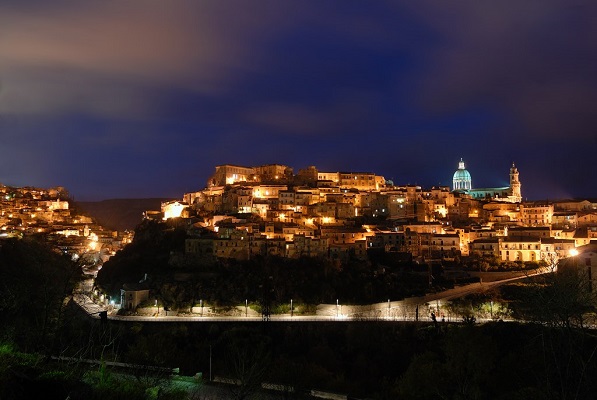
Ragusa is a historic city in south-eastern Sicily, set in the Val di Noto on the southern Monti Iblei. Its urban landscape is one of hills, deep valleys, gorges and connecting bridges, with the countryside stretching towards the Mediterranean coast. The city is especially defined by its split identity: Ragusa Ibla, the older nucleus, and Ragusa Superiore, the upper town that developed on higher ground.
The roots of Ragusa reach back to ancient Ibla, also known as Hybla Heraia, with the area inhabited over time by Sicels, Greeks, Romans, Byzantines, Arabs, Normans and later powers. Its present character was decisively shaped after the destructive earthquake of 1693, when reconstruction in the 18th century gave the city one of the clearest expressions of Sicilian Baroque in the Val di Noto.
This contrast between medieval fabric and planned upper town gives Ragusa a distinctive rhythm: old and new city facing each other across valleys, linked by steps, roads and bridges. It is this layered form, as much as its architecture, that makes Ragusa one of Sicily’s most recognisable historic cities.
Patron Saints:
Saint George (San Giorgio) – 23 April
Saint John the Baptist (San Giovanni Battista) – 29 August
Nearest Airport:
Comiso (Pio La Torre) – (19 km, 00:19)
Neighboring Cities:
.jpg)
Castiglione di Ragusa – google maps
Kamarina – google maps
Donnafugata Castle – google maps