
Ficarra is a medieval hill village in the Nebrodi Mountains, set about 450 metres above sea level between the valleys of the Naso and Brolo streams. Built across three hills, it looks out towards the Tyrrhenian Sea and the Aeolian Islands, while woods, olive groves, chestnut trees and hazelnut groves define its rural setting. Its compact old town has the close, vertical feel of a mountain borgo, with narrow lanes, stairways and old stone architecture shaping a quiet but strongly rooted local character.
Its historical identity is layered rather than simple. The earliest origins are uncertain, with traditions linking the settlement to names such as Pallisa and the Arabic Al Fakhar, while 17th-century maps record it as “La Ficara”. In the medieval period it was connected with the wider struggles and noble powers of northern Sicily, passing after the War of the Vespers from the Lauria to the Lancia/Lanza di Brolo family. Today Ficarra stands out as a three-hill Nebrodi village where rural landscape, medieval memory and literary associations with Lucio Piccolo and Giuseppe Tomasi di Lampedusa remain closely intertwined.
Patron Saint:
Maria SS. dell’Annunziata – 25 March
Nearest Airport:
Catania (Fontanarossa) – (111 km, 02:03)
Neighboring Cities:

Attractions in Ficarra
Art and Architecture
Chiesa Madre Maria SS. Annunziata: Set on one of Ficarra’s hilltops, the church contains marble sculptures associated with the Gagini workshop. Among its works is a 16th-century statue of the Annunziata attributed to Antonello Gagini.
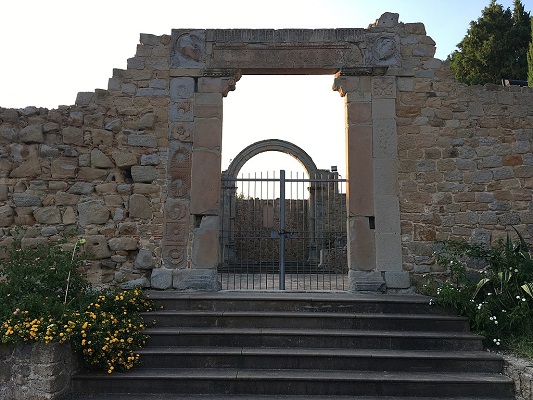
Convento dei Cento Archi: Also known as the Convento dei Minori Osservanti, this ruined religious complex occupies a panoramic hilltop position. Its surviving remains include an arch of the former Church of Santa Maria del Gesù.
Palazzo Milio: This unfinished baronial palace is an example of Ficarra’s 19th-century aristocratic architecture.
Chiesa delle Logge: The church takes its name from porticoes that once stood nearby, where a market was held during the patronal feast. Local tradition connects its foundation with a stopping place during the transport of the Annunziata statue from Brolo to Ficarra.
Chiesa del Carmelo: This church contains the burial places of members of the Lancia family, linking it to one of Ficarra’s former ruling families.
Nature Sites
Sulle tracce dei Gattopardi: This historical and nature trail passes through Ficarra’s landscape of monumental olive trees. Some of the trees along the route are described as more than 700 years old.
Things to Do in Ficarra
Traditional Events
Festa di San Sebastiano: This January celebration includes a procession through the centre, with devotees carrying the saint’s statue on their shoulders. Small blessed loaves are distributed during the feast.
Festa della Madonna del Carmelo: Traditionally celebrated on the Sunday following 16 July, the feast includes a religious procession. Food festivities and musical performances also form part of the celebrations.
Festa di Maria SS. Annunziata: The celebration in early August includes a procession of the Annunziata statue along a traditional route. A further observance takes place on 25 March.
Christmas Nativity Traditions: Ficarra’s Christmas celebrations include a living nativity and nativity displays in the town’s neighbourhoods, alongside concerts and cultural events.
Museums
Museo dei Giochi e dei Giocattoli del Medioevo: Housed in the Fortezza Carceraria, this museum focuses on medieval games and toys. The former fortified prison also has a terrace with views towards the Tyrrhenian Sea and the Aeolian Islands.
Museo dell’Arenaria e degli Scalpellini dei Nebrodi: Located within the Convento dei Cento Archi complex, this museum explores sandstone and the local tradition of stoneworking.
Centro Lucio Piccolo di Calanovella: The centre holds documents, photographs and personal objects relating to the Sicilian poet Lucio Piccolo.
Museo Ficarrese dell’Emigrazione: This museum recounts migration from the Nebrodi to Argentina and other destinations around the world.
Traditional Food
Minuta Olive Oil: Ficarra’s olive-growing tradition includes oil made from the local Minuta olive variety.
Almond and Hazelnut Sweets: Local confectionery includes almond pastries and mennula e nucidde nghiazzate: almonds and hazelnuts coated in red sugar icing.
Buccellato Ficarrese: Ficarra’s version of buccellato is a traditional sweet particularly associated with Christmas.
Practical Travel Information for Ficarra
Getting There by Car: From Messina, take the A20 towards Palermo and leave at Brolo–Capo d’Orlando Est, then continue towards Ficarra. An alternative follows the SS113 Messina–Palermo road to Brolo before continuing to the village.