
Cerami is a historic hill town in inland Sicily, in the Enna area, set on the reliefs of the Caronie at the foot of Monte dell’Annunziata. Surrounded by oak woods and Mediterranean scrub, it has the character of a quiet mountain borgo, with a strong religious memory and a landscape that links the town to the wilder interior of the island.
Its name is connected in the sources to the Greek *Kèramos*, meaning “ceramics”, while its early origins remain uncertain, with traditions and finds pointing to very ancient settlement. Cerami’s identity was shaped by successive Greek, Roman, Byzantine, Arab and Norman phases; under Arab rule the village was known as Rahal, before becoming closely tied to the Norman advance in Sicily.
That Norman memory is central to the town’s distinctiveness. In the 11th century Roger of Hauteville established a military presence here under Serlone, and the Battle of Cerami in 1063 became one of the symbolic moments in the Norman conquest of the island. Today, Cerami is defined by this layered inland history, its mountain setting and a local culture where devotion and medieval memory remain unusually visible.
Patron Saint:
Saint Ambrose (Sant’Ambrogio) – 7 December
Nearest Airport:
Catania (Fontanarossa) – (75 km, 01:23)
Neighboring Cities:
Capizzi, Cesarò, Gagliano Castelferrato, Mistretta, Nicosia, Troina
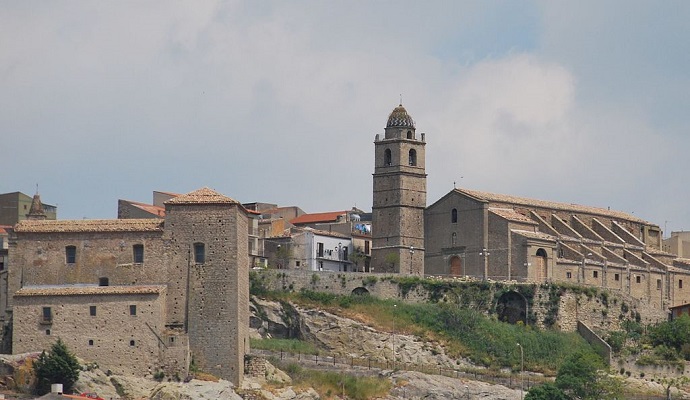

Attractions in Cerami
Art and Architecture
Chiesa Madre di Sant’Ambrogio: Cerami’s mother church houses an eighteenth-century wooden statue of San Michele Arcangelo by Filippo Quattrocchi and a Madonna and Child by Antonello Gagini.
Chiesa di San Sebastiano: A decorated Baroque façade distinguishes this church, which contains a statue of San Sebastiano.
Chiesa di Sant’Antonio Abate: This church combines a Baroque façade with a Gothic portal and a low bell tower. Its interior includes eighteenth-century stucco decoration.
Chiesa della Madonna del Carmelo: The church preserves a wooden crucifix by Frà Umile da Petralia, dated 1639.
Chiesa di San Benedetto: Its religious artworks include an altarpiece depicting the Madonna della Lavina and a painting of the Assumption by Giuseppe Rapisardi.
Cappella della Madonna del Tocco: This small chapel in Piazza Tocco has a frescoed ceiling.
Santuario della Madonna della Lavina: Just outside the built-up centre, this pilgrimage sanctuary is associated with the tradition of a miraculous icon discovered in the seventeenth century.
Things to Do in Cerami
Traditional Events
Festa di Sant’Antonio Abate: This January celebration includes the “calata du circu”, a ritual in which a votive structure decorated with laurel, oranges and cuddure bread is raised and lowered on ropes so that children can collect its offerings.
Festa di San Sebastiano: The celebrations include a traditional laurel procession associated locally with the memory of the Normans’ triumphant entry into Cerami. The festivities also share the “calata du circu” ritual.
Festa di San Michele Arcangelo: Held on the penultimate Saturday in May, this celebration includes an afternoon procession departing from the Chiesa Madre, led by confraternity members in traditional dress. The liturgical observance falls separately on 29 September.
Festa della Madonna del Carmine: Traditionally celebrated on the second Sunday in August, the feast combines religious services and processions with community festivities.
Festa della Madonna della Lavina: Taking place on 7–8 September, this celebration includes an evening procession through the town, attended by confraternities, clergy and the local community.
Sagra del Cavatello e del Peperone: This traditional September food festival centres on cavatello and peppers.
Festa di Sant’Ambrogio: Celebrated on 7 December, the feast includes a solemn Mass attended by confraternities and members of the local community.
Traditional Food
Cavatieddu atturrato: This traditional Cerami biscuit is flavoured with chopped toasted almonds, cinnamon and aromatic essences.
Local cheeses: Cerami’s dairy traditions include provola, pecorino, canestrato and ricotta.
Places to Visit Near Cerami
Riserva Naturale Orientata Campanito-Sambughetti: In the area between Cerami and Nicosia, this nature reserve offers woodland landscapes and opportunities for hiking.
Practical Travel Information for Cerami
Arriving by car from Palermo: Take the A20 towards Messina and leave at Santo Stefano di Camastra. Continue along the SS117, SP27 and SS120, following signs for Cerami.