
Contessa Entellina is a small inland village in the Palermo area, set in the Valle del Belice on the northern side of Monte Genuardo. Surrounded by open countryside, hills and dense woods, it has the character of a rural borgo whose identity is closely tied to its mountain setting and to the cultural memory of its community.
The village was founded in the 15th century by Albanian, or Greek-Albanian, exiles on the site of the older casale of Comitissa, later known as Contessa. In 1520, the settlement developed further when lands were assigned to refugees from the island of Andros, helping shape the Arbëreshë character that still distinguishes the town today.
That heritage remains central to Contessa Entellina: Albanian language, Byzantine-rite traditions and ancestral customs have given the village a cultural profile unlike most Sicilian inland towns. Its distinctive appeal lies in this combination of Belice countryside, ancient territorial memory and a living Arbëreshë identity preserved far from the coast.
Patron Saint:
St. Nicholas of Bari (San Nicola da Bari) – 6 December
Nearest Airport:
Trapani (Birgi) – (97 km, 01:47)
Neighboring Cities:
Bisacquino, Campofiorito, Poggioreale, Salaparuta, Sambuca di Sicilia, Santa Margherita di Belice

Attractions in Contessa Entellina
Archaeological Sites
Rocca di Entella: The remains of the ancient city of Entella occupy this rocky height outside the town. Excavations have revealed ancient buildings and Hellenistic burial grounds.
Art and Architecture
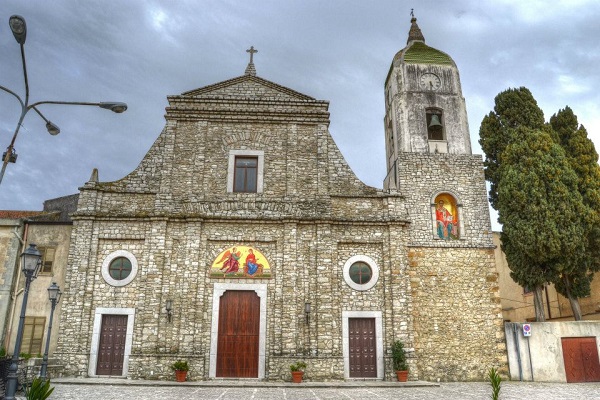
Chiesa della Santissima Annunziata e di San Nicola: The town’s principal Greek-rite church has three naves and an iconostasis. Its furnishings include paintings and a statue of San Nicola.
Chiesa delle Anime Sante del Purgatorio: Standing in Piazza Umberto I, this church contains an iconostasis. Two plaques on its façade commemorate the war dead.
Chiesa di San Rocco: This eighteenth-century church preserves the first iconostasis from the town’s Greek parish church. Its religious statues depict San Rocco, the Immacolata, the Madonna di Fatima and Sant’Eligio.
Chiesa di Santa Maria delle Grazie: Also known as the Chiesa di Maria SS. della Favara, this sixteenth-century church was built near a spring. It houses the processional platform used to carry the Madonna della Favara and a pipe organ made by Casimiro Allieri of Bergamo. Originally Greek-rite, the church passed to the Latin-rite congregation in 1698, while retaining certain rights for the Greek community.
Abbazia di Santa Maria del Bosco: Outside the built-up centre, this abbey stands within the protected landscape of the Riserva Naturale Orientata Monte Genuardo e Santa Maria del Bosco.
Castles
Castello di Calatamauro: The ruins of this medieval castle occupy a steep rocky spur overlooking the surrounding plain. In the thirteenth century, it was listed among Frederick II’s castra exempta, castles under direct royal control.
Nature Sites
Riserva Naturale Grotta di Entella: This reserve protects a cave on the western flank of Rocca di Entella. Its walls contain large gypsum crystals, and an underground river once flowed through the cavity.
Riserva Naturale Orientata Monte Genuardo e Santa Maria del Bosco: This protected natural area encompasses the wooded setting around the abbey of Santa Maria del Bosco. The landscape is also of geological interest.
Things to Do in Contessa Entellina
Traditional Events
Epifania: Epiphany is marked by a solemn Divine Liturgy and the blessing of the waters at the “biveri” fountain in the municipal gardens. The ceremony commemorates Christ’s baptism in the River Jordan and includes the descent of a white dove.
Festa di San Giuseppe: For the feast on 19 March, households prepare laden devotional tables known as artari. On the eve of the feast, “Lu viaggiu dulurusu” is sung in Sicilian with musical accompaniment; the following day’s traditions include the pranzo dei Santi and the distribution of pasta with sweetened breadcrumbs.
Easter Celebrations: The Easter cycle begins with songs recalling the resurrection of Lazarus on the Friday before Palm Sunday. After the midnight Resurrection service on Holy Saturday, “Christòs Anèsti” is sung through the streets. On Easter Sunday, a procession from the Greek-rite church carries this greeting to the Latin-rite congregation at the Chiesa della Madonna della Favara.
Terre Sicane Wine Fest: Held in July or August, this food and wine festival focuses on wines from the Terre Sicane. Its setting is the Abbazia di Santa Maria del Bosco.
Fiera Agricola: This September fair showcases local agriculture and food production through exhibitions, talks and tastings. Entertainment and a traditional Notte Bianca also form part of the celebration.
Festa di Maria SS. della Favara: On 8 September, an evening solemn Mass at the Chiesa di Maria SS. della Favara is followed by a procession carrying the Madonna’s statue through the town.
Festa di San Nicola di Mira: The celebration on 6 December includes the traditional distribution of blessed panuzzi di San Nicola, small loaves handed out after the religious service.
Festa dell’Immacolata and Festa e Djavulazit: On the afternoon of 7 December, straw devils are lowered on a rope from the bell tower of San Rocco and set alight with torches, symbolising the Madonna’s defeat of the devil. A solemn Divine Liturgy follows on 8 December.
Museums
Antiquarium di Entella: This archaeological museum in Contessa Entellina displays finds and materials from Rocca di Entella, providing context for the ancient settlement.
Traditional Food
Frogia: This local Easter speciality is made with herbs and ricotta and belongs to the town’s tradition of festive baking.
Local Wine, Olive Oil and Cheese: Contessa Entellina’s agricultural products include DOC wine, extra virgin olive oil and cheeses. Vastedda del Belice is among the cheeses produced in the area.
Practical Travel Information for Contessa Entellina
Getting There by Road: From Palermo, take the SS 624 Palermo–Sciacca road to the Contessa Entellina exit, then continue on the SP 12.