
Avola is a coastal town in south-eastern Sicily, set on the Ionian Sea along the Gulf of Noto, where the coastal plain rises toward the Iblei hills. Its character comes from this meeting of sea, countryside and planned urban order: a town with an eighteenth-century historic centre, traces of Liberty-style architecture and a cultural memory closely tied to local wine-growing and almond traditions.
The area is linked in the sources to ancient Hybla major and later to old Avola, also known as Avola antica. The present town, however, owes its defining shape to the aftermath of the 1693 Val di Noto earthquake, when the former hilltop settlement was abandoned and rebuilt closer to the sea. Prince Nicolò Pignatelli d’Aragona commissioned the reconstruction, and the Jesuit architect Angelo Italia designed a Renaissance-inspired hexagonal plan.
That geometry still gives Avola its most recognisable identity: not just a seaside Sicilian town, but one of the island’s clearest examples of post-earthquake urban planning, set between the Ionian coast and the Iblei landscape.
Patron Saint:
Saint Venera (Santa Venera) – lst Sunday in July
Nearest Airport:
Comiso (Pio La Torre) – (87 km, 01:31)
Neighboring Cities:

Attractions in Avola
Art and Architecture
Chiesa Madre: Dedicated to San Nicola di Bari, Avola’s eighteenth-century mother church faces Piazza Umberto I. It forms part of the square’s architectural ensemble alongside the former Palazzo Ducale.
Palazzo Ducale: The former ducal palace stands on Piazza Umberto I, near the Chiesa Madre. Its accompanying nineteenth-century clock tower is a distinctive feature of the square.
Chiesa di San Giovanni Battista: This church preserves neoclassical stuccowork, offering a different decorative character from Avola’s Baroque façades.
Chiesa della Santa Croce: The church houses a ciborium, an architectural canopy associated with the altar, singled out among its interior furnishings.
Chiesa della SS. Annunziata: A convex façade distinguishes this church and gives it a notable place among Avola’s Baroque religious buildings.
Chiesa di Santa Venera: This eighteenth-century church stands in Piazza Teatro, alongside the neoclassical Teatro Comunale.
Santuario Madonna delle Grazie: At Avola Antica, the sanctuary occupies the site of a former Capuchin convent. It houses a venerated image of the Virgin Mary, associated with a small rock-cut chapel marking the place where the image was found.
Nature Sites
Riserva Naturale Orientata Cavagrande del Cassibile: Extending across the territories of Avola, Noto and Siracusa, this reserve encompasses a steep-sided canyon with caves, springs and freshwater pools. Mediterranean scrub, orchids and oriental plane trees grow within the gorge, which also contains ancient rock-cut tombs and traces of cave settlements.
Beaches
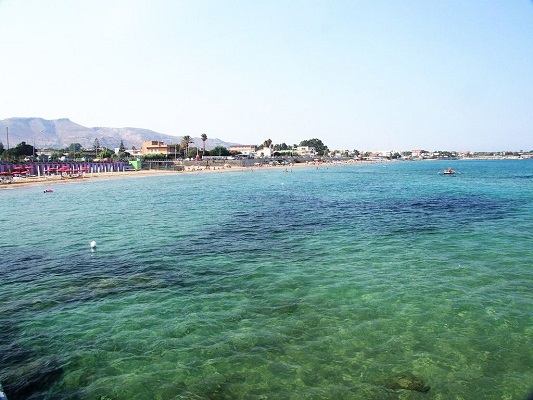
Spiaggia di Gallina: Gallina is a beach on Avola’s coast, identified as a place for sea bathing.
Things to Do in Avola
Traditional Events
Carnevale Avolese: Avola’s carnival features traditional masks, allegorical and flower-decorated floats, and costumed groups. A dialect poetry competition is another distinctive part of the celebration.
Settimana Santa: Holy Week celebrations begin on Palm Sunday. On Good Friday, the processione della Spina Santa carries a figure of the crucified Christ in a glass urn through the centre alongside the Addolorata; Easter Sunday brings the meeting of the risen Christ and the Madonna.
Festa della Madonna delle Grazie: Held on 2 July, this religious celebration centres on the veneration of the sacred image kept at the sanctuary in Avola Antica.
Festa di Santa Venera: Traditionally celebrated on the last Sunday in July, the feast includes an evening procession of Santa Venera’s statue through the historic centre and fireworks. The following day, known as Lunedì di Santa Venera, is associated with a concert in the square.
Sagra del Nero d’Avola: Traditionally held in the first week of August, this wine festival celebrates Nero d’Avola with tastings, concerts and performances.
Ottobre in Fest: This October food and wine celebration focuses on two products closely associated with Avola: Nero d’Avola wine and almonds.
Museums
Museo Civico: Avola’s civic museum has a collection of ancient finds from the old town, providing an archaeological perspective on the earlier settlement.
Traditional Food
Mandorla Pizzuta d’Avola: This local almond variety is used extensively in confectionery. Preparations include almond milk, granita, sugar-coated almonds, torrone, biscuits and frutta martorana, the fruit-shaped marzipan sweets.
Nero d’Avola: The red wine bearing the town’s name is one of Avola’s characteristic local products and is produced in the surrounding area.
’Mpanati: These round, filled focacce come with a range of savoury fillings. Local versions include sausage with broccoli or potatoes, vegetables, eel and tuna.
’Nfagghiulata ri favi: This local stuffed focaccia combines broad beans and ricotta.
Practical Travel Information for Avola
Getting There by Car: From Catania, take the A18 towards Siracusa–Gela, leave at the Avola exit and continue on the SS115.