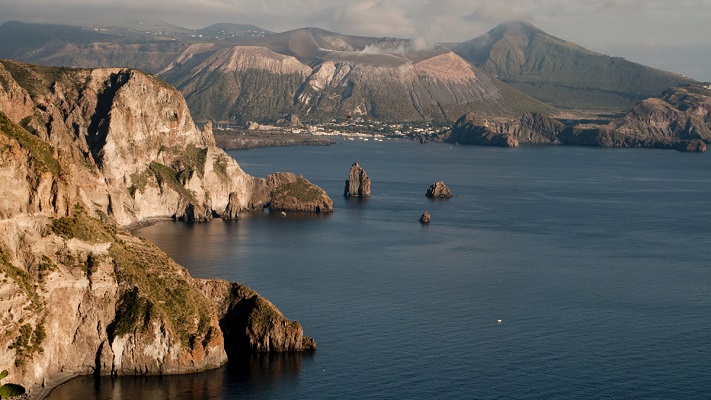
Vulcano is a small volcanic island in the Tyrrhenian Sea, part of the Aeolian Islands north of Sicily from the Gulf of Patti. Its landscape is defined by volcanic cones, dark sand, cliffs, coves and clear water, with human settlement set closely against a terrain that still feels physically active through sulphurous waters, fumaroles and thermal traces.
The island’s identity begins with its geology: it was formed from the fusion of several volcanoes. Its name and mythology are just as important, since Roman tradition associated Vulcano with the workshop of Vulcan, the god of fire, an idea inspired by the island’s heat, gases and mineral presence. Greek and Roman fascination with these forces helped give the island a character that is both natural and mythical.
Today Vulcano combines coastal scenery, volcanic austerity and pockets of island life, at times quiet and village-like, at times more animated. What makes it distinctive is this unusually direct meeting of sea, settlement and living volcanic memory.
We use cookies to ensure that we give you the best experience on our website. If you continue to use this site we will assume that you are happy with it.