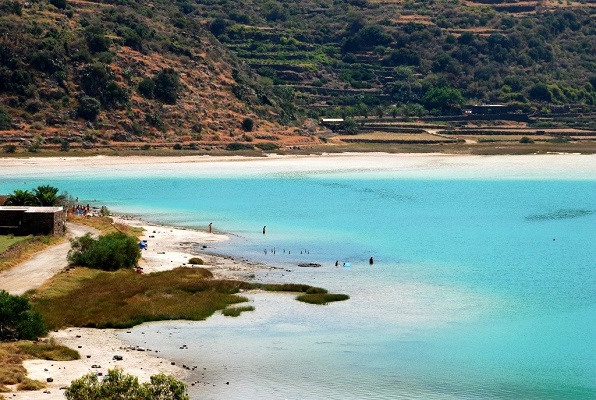
Pantelleria is a volcanic Mediterranean island and comune in the province of Trapani, set between Europe and Africa and closer to Tunisia than to Sicily. Known as the “Black Pearl” for its dark volcanic stone, it has a rugged landscape of extinct crater cones, lava formations, rocky coastlines and dry-stone rural architecture.
Its identity is as much historical as geological. The island has been inhabited since the Neolithic and has carried many names, from Cossyra in the Greek and Roman world to Bent el Riah under the Arabs, before becoming Pantelleria under the Angevins in the 13th century. These layers left a culture marked by Mediterranean and North African influences, especially visible in its traditional vaulted dammusi, a form linked to Arab building knowledge.
Today Pantelleria feels calm and elemental rather than resort-like, with a character shaped by stone, wind, sea and long continuity of settlement. Its distinctiveness lies in the meeting of volcanic severity, island solitude and a cultural memory that looks both toward Sicily and across the water to North Africa.
We use cookies to ensure that we give you the best experience on our website. If you continue to use this site we will assume that you are happy with it.