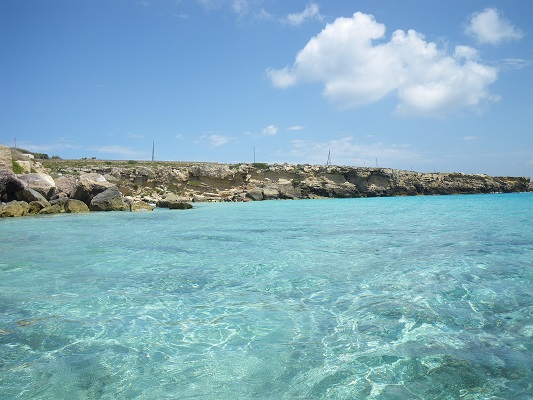
Favignana is the largest island of the Egadi archipelago, lying off Sicily’s western coast near Trapani and Marsala. Often described by its butterfly-like outline, it combines a jagged shoreline of coves, cliffs and sea grottoes with white tuff landscapes, cultivated plains, Mediterranean scrub and a mountainous ridge that gives the island a rugged profile.
Its identity is deeply maritime. The island was known to the Greeks as Aegusa, while its present name derives from the warm westerly wind Favonio, or Favonius. Favignana has been inhabited since ancient times, and its waters also carry a major historical memory: in 241 BC, the Roman victory over Carthage here brought the First Punic War to an end.
Later centuries added Arab, Saracen, Norman and Florio-era layers to the island’s story. The Arabs are associated with the early tuna-fishing system, and the Florio family’s purchase of the island in 1874 marked a period of renewed prosperity tied to that tradition. Today, Favignana’s distinctive character comes from this meeting of clear sea, pale tuff, maritime culture and a history that reaches from antiquity to Sicily’s great tuna-fishing age.
We use cookies to ensure that we give you the best experience on our website. If you continue to use this site we will assume that you are happy with it.