
Condrò is a very small village in the Province of Messina, set in the inland Tyrrhenian area of the Milazzo district. It lies in a low valley on the slopes of the Peloritani Mountains, at the western foothills of Monte Cupola, with the Canalicchio stream crossing its territory. Around the settlement, hills planted with vineyards, olive groves, citrus groves and orchards give the village a rural character closely tied to agricultural life.
Its name is linked to the Greek *Condros*, meaning “granule” or “cartilage”, while the settlement appears in a written document of 1262 as the *Casale di Condrò*. Over time it became part of a feudal landscape connected with noble families including the Marescalco, Isolda di Scala, Castagna and Bonfiglio lines; in 1637 Francesco Bonfiglio received the title of Prince of Condrò from King Philip IV of Spain.
Today Condrò remains intimate and quiet, with a compact old village atmosphere and a strong memory of its noble and religious traditions. Its distinction lies in this combination of tiny scale, rural setting and unusually clear feudal identity.
Patron Saint:
Saint Vitus (San Vito) – 1st Sunday in July
Nearest Airport:
Catania (Fontanarossa) – (152 km, 01:58)
Neighboring Cities:

Attractions in Condrò
Art and Architecture
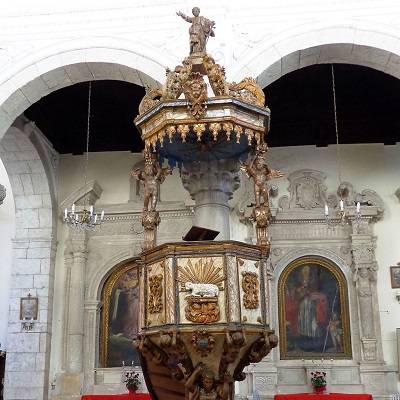
Chiesa Madre: Overlooking Piazza Umberto I, Condrò’s mother church is dedicated to the Madonna del Tindari and San Vito. Its interior contains decorative stucco, a wooden coffered ceiling with a central depiction of the Coronation of the Virgin, and a late Baroque high altar in carved, painted and gilded wood. Religious paintings and statues, mainly from the 17th and 18th centuries, complete the collection.
Chiesa di Santa Caterina: Dating from the first half of the 18th century, this church has undergone restoration intended to give it a renewed role as a cultural and community space.
Monumento ai Caduti: Beside the Chiesa Madre stands Condrò’s memorial to those who died in the First World War. It was designed by the engineer Francesco Arcidiacono and executed by the local sculptor Giuseppe Nastasi.
Convento dei Frati Paolotti: The remains of this 17th-century convent stand on a hill within Condrò’s territory. They can be seen from Piazza Convento.
Things to Do in Condrò
Traditional Events
Carnevale: Condrò’s Carnival traditions include masked dancing, music and seasonal sweets. The celebrations conclude with the “processo a Carnevale”, a humorous symbolic trial of Carnival.
Settimana Santa: Holy Week begins with the blessing of palms outside the Chiesa di Santa Caterina and a procession to the Chiesa Madre on Palm Sunday. Maundy Thursday features the chant known as “’U Lamentu”, while Good Friday includes a procession of the varette, religious processional displays, and a relic of the Holy Cross.
Festa di San Vito: The celebration has two traditional dates: 15 June, with a procession of the arm-shaped reliquary, and the second Sunday in July, when the saint’s statue is carried through the village. During the July procession, the bearers make the statue turn and sway in a distinctive ritual movement.
Festa della Madonna del Tindari: Traditionally held on 8 September, this feast includes a procession with the statue kept in the Chiesa Madre. Celebrations around the feast day also feature band music, entertainment and fireworks.
Traditional Food
Rapisarda Apricots: The fragrant “Rapisarda” apricot is a characteristic product of Condrò’s agricultural landscape, which includes orchards alongside vineyards, olive groves and citrus groves.
Practical Travel Information for Condrò
Road Approach: From the SS113, follow signs for San Pier Marina, then take the SP63 towards Condrò.
Railway Stations: The nearest railway stations are Milazzo and Rometta.